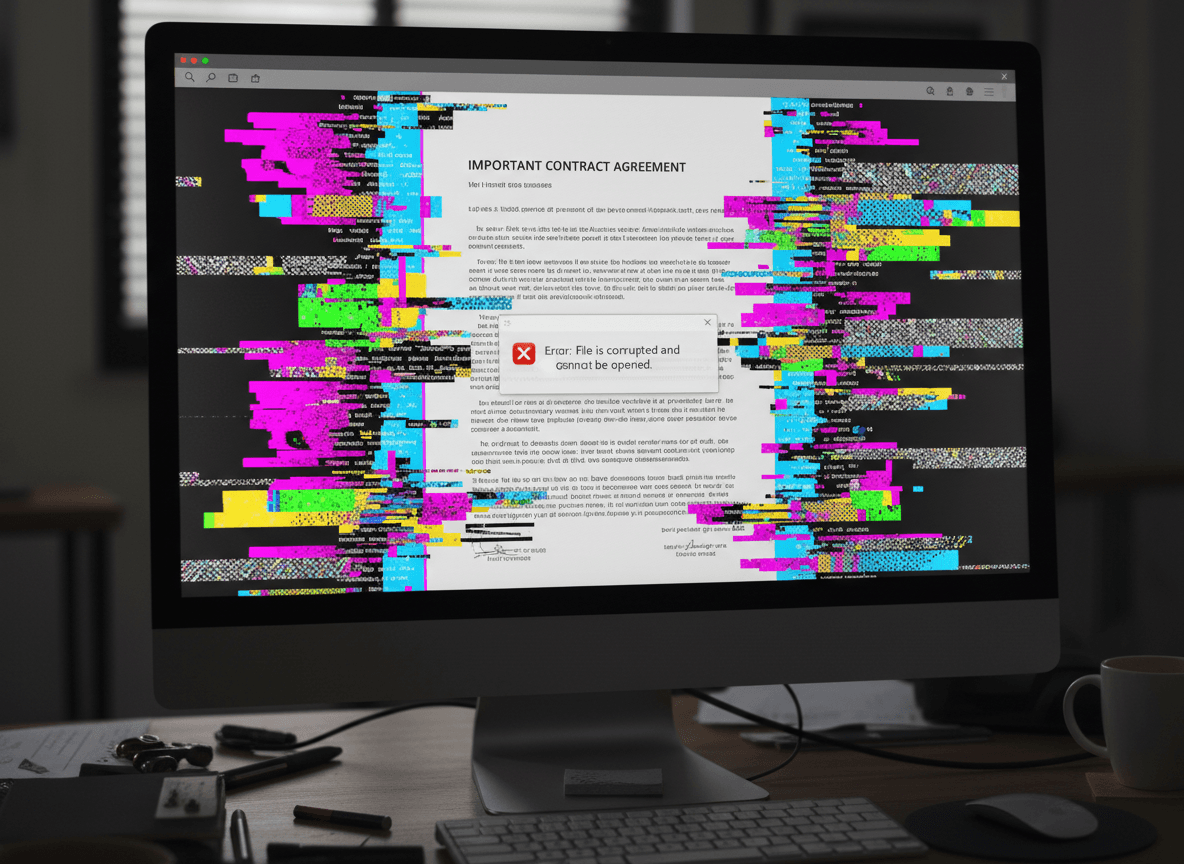
I opened a PDF last week that I'd been working on for days, and instead of my document, I got an error message: "File is damaged and cannot be repaired." My heart sank. But after using our Repair PDF tool, I managed to recover most of the content. That experience taught me that PDF corruption comes in many forms, and understanding the specific problem helps you find the right solution.
PDF corruption isn't a single problem—it's a category of issues that prevent PDFs from working correctly. Our Repair PDF tool can fix many of these issues. Files might refuse to open entirely, show error messages, display blank pages, or have missing or garbled content. Each type of corruption has different causes and may respond to different repair approaches.
Recognizing Different Corruption Types
Files that won't open at all are often suffering from header or structure corruption. The PDF file structure is broken at a fundamental level, preventing any viewer from reading it. This is usually the most severe form of corruption, but it's not always hopeless. Some repair tools can rebuild the file structure even when standard viewers can't read it.
Error messages provide clues about what's wrong. "Invalid object reference" suggests the PDF's internal structure is damaged. "File is encrypted" when you know it shouldn't be might indicate corruption rather than actual encryption. "Unexpected end of file" means the file was cut off during transfer or saving. Understanding these messages helps you choose the right repair approach.
Blank pages can indicate several problems. Sometimes the page content exists but can't be rendered due to corruption in the rendering instructions. Other times, the pages are actually missing from the file. Some repair tools can distinguish between these scenarios and recover content that's present but not displaying.
Missing or garbled content suggests partial corruption. The file structure might be intact enough to open, but specific pages or elements are damaged. This type of corruption is often recoverable because the undamaged parts of the file can help repair tools understand the structure and reconstruct missing pieces.
Slow loading or freezing can indicate corruption that's not severe enough to prevent opening but causes problems during rendering. The file might have corrupted objects that take a long time to process, or it might be trying to access data that doesn't exist properly. These issues are often fixable with repair tools that clean up the file structure.
Repair Tool Approaches
Different repair tools use different strategies. Some tools try to rebuild the PDF structure from scratch, extracting all readable content and creating a new, clean PDF file. This approach works well when the content is mostly intact but the structure is damaged.
Other tools attempt to fix the existing structure. They identify corrupted elements and try to repair them in place. This preserves more of the original file structure and metadata but might not work if corruption is too extensive.
Some tools focus on content extraction. They bypass the broken structure entirely and pull out whatever content they can access—text, images, pages. Then they rebuild a new PDF from the extracted content. This is less elegant but often more successful with severely corrupted files.
Advanced tools combine multiple approaches. They try structure repair first, fall back to content extraction if that fails, and use various techniques to maximize recovery. These tools are usually more effective but might be slower or more expensive.
When to Try Which Approach
Start with general-purpose repair tools. These are designed to handle common corruption issues and often work for the majority of problems. They're usually fast and easy to use, making them a good first attempt.
If the first tool doesn't work, try a different one. Different tools use different algorithms, so one might succeed where another fails. I keep several repair tools available because I've found that tool A might fix one type of corruption while tool B handles another type better.
For files with specific error messages, look for tools that address those specific issues. Some tools are optimized for certain types of corruption. If you're getting "invalid object" errors, a tool designed for structure repair might work better than a general-purpose tool.
Severely corrupted files might need specialized extraction tools. If standard repair fails, tools that focus on content extraction can often recover at least some pages or content. This is better than losing everything, even if you don't get the complete document back.
The Repair Process
Always backup the corrupted file before attempting repair. Some repair processes modify the original file, and if something goes wrong, you want to be able to start over. Keep the original corrupted file until you're certain the repair was successful.
Test repaired files thoroughly. Don't just check that they open—scroll through all pages, verify content is complete, check that formatting looks correct, and test any interactive elements. A file that opens but is missing half its content isn't really repaired.
Try repair in stages. Some tools offer different repair intensity levels. Start with a gentle repair that tries to preserve as much as possible. If that doesn't work, try more aggressive repair that might sacrifice some formatting to recover content.
Document what works. If you find a tool or approach that successfully repairs a specific type of corruption, note it for future reference. Different corruption types often respond to different solutions, and having a record of what worked helps you handle similar problems faster.
Common Success Patterns
Structure corruption is often repairable. When the file structure is damaged but content is intact, repair tools can usually rebuild the structure and recover the file. This is one of the most common types of corruption and has a high success rate with proper tools.
Content corruption is trickier. If the actual page content is damaged—not just the structure—repair becomes harder. Some content might be recoverable, but severely damaged pages might be lost. This is why backups are so important.
Partial corruption often responds well to repair. Files where only some pages or elements are corrupted can usually be partially recovered. You might lose the corrupted sections but keep the rest of the document, which is better than losing everything.
Multiple repair attempts can help. Sometimes running a repair tool multiple times, or using one tool to partially fix a file and another to finish the job, produces better results than a single repair attempt. Don't assume one failed attempt means the file is hopeless.
When Repair Might Not Work
Some corruption is too severe. If the file structure is completely destroyed and content is heavily damaged, repair might not be possible. But even in these cases, content extraction tools might recover some pages or elements.
Very old or non-standard PDFs can be problematic. PDFs created with outdated software or using non-standard features might not respond well to modern repair tools. The tools are designed for standard PDF formats, and unusual files might need specialized approaches.
Encrypted or password-protected files add complexity. If a file is corrupted and also encrypted, repair becomes more difficult. The encryption layer interferes with repair tools' ability to access and fix the underlying structure.
The key to successful PDF repair is persistence and the right tools. Our Repair PDF tool makes this easier. Try our tool first, use different approaches, and don't give up after the first attempt. Many corrupted PDFs can be at least partially recovered with our tool and the right approach.
Ready to repair your corrupted PDF? Try our Repair PDF tool now and see if we can fix your file.